


Winter weather brings cozy moments, hot cocoa, warm blankets, and crackling fireplaces. But it also brings one of the most stressful home emergencies: frozen pipes bursting. No homeowner ever plans for it, yet every winter in colder climates, thousands of homes face water damage because pipes freeze and crack.
If you’re asking, “What do I do when frozen pipes burst?” , you’re in the right place. In this comprehensive guide, we walk you through exactly what to do step-by-step, how to minimize damage, and how Keystone Adjusting can help you recover fast and fairly from insurance.
Whether you spotted water leaking into your home or only suspect your pipe froze in your basement, keep reading. By the end, you’ll feel calm, confident, and ready to handle this emergency like a pro.
Why Frozen Pipes Burst
Before we jump into steps, let’s understand why pipes burst in the first place.
When water freezes, it expands. That expansion creates immense pressure inside the pipe. Even the toughest pipes can’t handle the strain, and when pressure becomes too great, they crack or burst. Burst pipes leak water into walls, floors, and ceilings, often causing severe и sudden damage.
Common factors that cause frozen pipes:
- Uninsulated exterior walls
- Rapid drops in temperature
- Poor attic or basement insulation
- Pipes running through cold crawl spaces
- Drafts from windows or doors near plumbing
First Steps to Take When Frozen Pipes Burst
If you walk into a flood scenario, stay calm, your actions right now make a huge difference.
1. Shut Off Your Water Supply
As soon as you see water pooling or hear running water:
Turn off the main water valve.
This stops more water from entering the damaged pipe and flooding your home.
2. Turn Off Electricity in Affected Areas
If water is near electrical outlets or appliances:
Cut power at your breaker box.
Water and electricity is a dangerous combo. Safety first.
3. Protect Your Valuables
Move furniture, electronics, rugs, and sentimental items away from water.
Lay down towels or buckets where water is pooling.
4. Document Everything
Take clear photos and videos of:
- Burst pipes
- All water damage
- Personal items affected
- Before and after cleanup
This documentation is essential for your insurance claim with Keystone Adjusting.
What to Do Next
Dry the Area
Use fans and dehumidifiers to slowly dry out floors and walls.
Don’t let mold take hold.
Call a Licensed Plumber
A professional will:
- Locate the exact break
- Replace or repair the pipe
- Inspect your plumbing for other weak spots
Contact Your Insurance Company
Call your insurer as soon as you can. A burst pipe claim can be complex, and that’s where Keystone Adjusting comes in.
How Keystone Adjusting Helps After Frozen Pipes Burst
At Keystone Adjusting, we specialize in water damage claims, including those caused by burst pipes. We make sure:
- You get a full, fair assessment
- All damage is properly documented
- Repairs and restoration are covered
- You understand every step of the claims process
Our team works directly with your insurance provider to minimize stress and maximize your payout, giving you peace of mind during a tough situation.
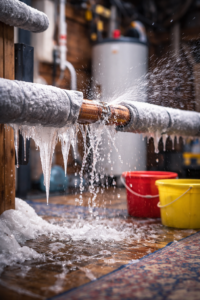
Total Damage You Could Face
A burst pipe doesn’t just leak water, it can:
- Ruin drywall and insulation
- Warp hardwood floors
- Ruin carpets and furniture
- Cause mold inside walls
- Damage personal belongings
Because water travels fast, a small leak can turn into thousands of dollars in damage within hours.
Preventing Burst Pipes in the Future
Prevention is always better than cleanup. Follow these steps before winter hits:
Insulate Exposed Pipes
Use foam or heat tape on pipes in:
- Basements
- Crawl spaces
- Garages
- Attics
Keep a Steady Warm Temp
Even when you’re away, keep your home at 55–60°F minimum.
Let Faucets Drip
Running a slow drip during extreme cold eases pressure inside the pipe.
Seal Drafts
Weather-strip windows and doors. Seal holes in exterior walls.
Frequently Asked Questions
How long does it take for a frozen pipe to burst?
There’s no exact timing, pipes can freeze and burst in minutes once water inside begins expanding.
Can I thaw a frozen pipe myself?
Yes, if the break hasn’t happened yet. Use a hair dryer, heat lamp, or warm towels. Never use open flames.
Will homeowners insurance replace the pipe?
Most policies cover sudden, accidental bursts, but not lack of maintenance. Keystone Adjusting helps verify coverage and maximize your claim.
What if I don’t have insurance?
Call Keystone anyway. We help you document damage so you have options for restoration and recovery.
Can I stay in my home after pipes burst?
It depends on damage severity. If structural or electrical risks exist, it’s often safest to stay elsewhere during repairs.
Real Stories, What Homeowners Experienced
“I thought I was safe… then water gushed into my family room overnight. Keystone Adjusting handled everything and kept me calm. They helped me get more coverage than I expected.”, Sarah D., homeowner
Your experience matters, and Keystone treats every claim personally.
Final Steps After the Emergency
- Complete plumber repairs
- Continue drying and dehumidifying
- Save every receipt
- Follow up with your insurance adjuster
- Get a final damage estimate
If you need expert help through the claims process, Keystone Adjusting is ready to step in.
Conclusion, You’re Not Alone After a Burst Pipe
A burst pipe is stressful. It’s sudden. It’s messy. But with the right steps and right support, you can recover stronger.
Remember:
- Shut off water
- Document damage
- Call a plumber
- Call Keystone Adjusting
Let us guide you through recovery with care, precision, and strong results.
Frozen pipes burst? Don’t wait. Contact Keystone Adjusting today for fast, trusted claim support and damage assessment assistance.





 535 NJ-38 #355K, Cherry Hill Township, NJ 08002 |