


Water can destroy a home faster than almost any other type of damage. A burst pipe, roof leak, appliance failure, or storm intrusion can soak floors, drywall, insulation, electrical systems, and personal belongings in minutes. Once water spreads through a property, the damage often continues to worsen long after the initial incident.
For homeowners, navigating a water damage insurance claim can quickly become confusing. Insurance policies contain complex language, strict documentation requirements, and timelines that must be followed carefully. Missing details or filing incorrectly can reduce the payout or even lead to claim denial.
Understanding how a water damage insurance claim works gives property owners a better chance of recovering the compensation needed to repair their homes and restore their property.
What Is a Water Damage Insurance Claim?
A water damage insurance claim is the process of requesting compensation from your insurance company after water damages your property. The goal of the claim is to cover the cost of repairs, replacement of damaged items, and in some cases temporary housing if the home becomes unlivable.
Insurance companies typically require detailed documentation before approving payments. This includes photographs, repair estimates, contractor reports, and proof of loss.
Common incidents that lead to a claim include:
- Burst or leaking pipes
- Washing machine or appliance leaks
- Water heater failures
- Roof leaks from storms
- HVAC leaks
- Overflowing plumbing fixtures
- Frozen pipes in winter
The challenge for many homeowners is that insurance companies often interpret coverage narrowly. What appears to be obvious damage may still be disputed depending on how the incident occurred.
Types of Water Damage Typically Covered by Insurance
Not all water damage is treated the same by insurance policies. Coverage usually depends on whether the damage was sudden and accidental.
Many policies cover water damage caused by:
Sudden pipe bursts
If a pipe suddenly breaks and floods the home, insurance often covers the resulting damage.
Appliance malfunctions
Dishwashers, refrigerators, and washing machines sometimes fail and release water into surrounding areas.
Roof leaks caused by storms
Wind or storm damage that allows water to enter the property may qualify for coverage.
HVAC or plumbing failures
Unexpected mechanical failures that release water may fall under covered events.
Insurance companies typically review the cause of the water intrusion carefully before determining eligibility.
Water Damage That May Not Be Covered
Insurance companies frequently deny claims if they determine the damage occurred due to neglect, maintenance issues, or long-term leaks.
Examples may include:
- Slow leaks that were ignored for months
- Mold growth from unresolved water issues
- Flooding caused by rising water outside the home
- Foundation seepage over time
Flooding from storms usually requires a separate flood insurance policy.
Because policies vary widely, reviewing the exact language of the policy is critical when filing a water damage insurance claim.
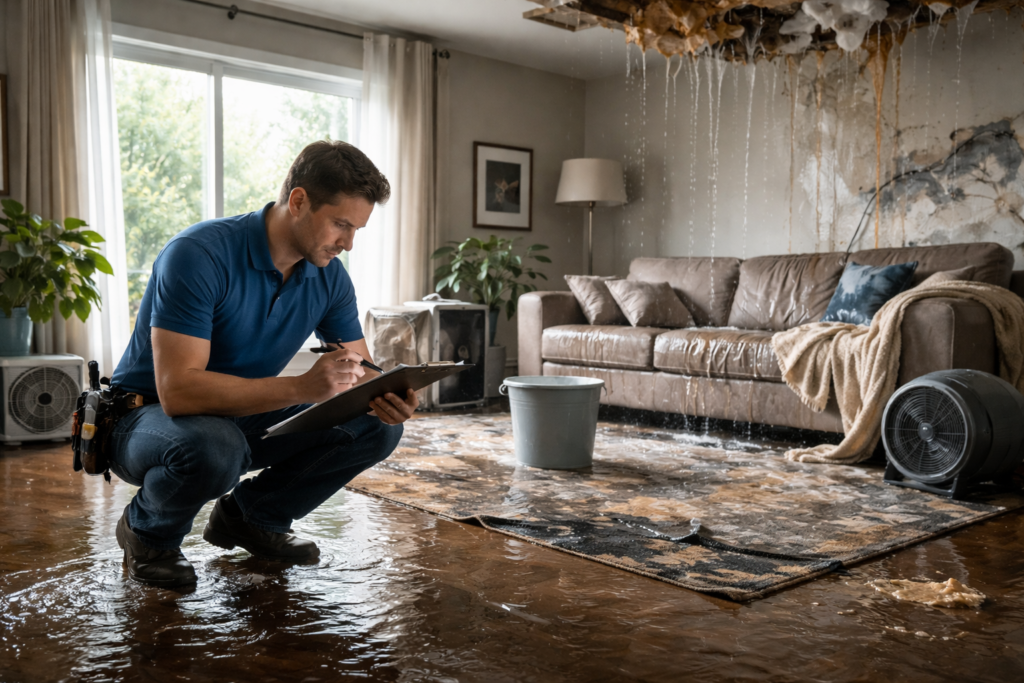
The Water Damage Insurance Claim Process
Filing a claim involves several stages. Each step plays a role in determining how much compensation a homeowner ultimately receives.
1. Stop the Source of the Water
The first priority is preventing additional damage. Shutting off the water supply, covering roof openings, or stopping leaks helps reduce further loss.
2. Document the Damage
Photographs and video evidence should be taken immediately. Insurance companies rely heavily on documentation when evaluating claims.
Important areas to record include:
- Floors and subfloors
- Walls and insulation
- Cabinets and furniture
- Electrical systems
- Personal belongings
Detailed documentation strengthens a water damage insurance claim by showing the full extent of the loss.
3. Notify the Insurance Company
Most policies require prompt reporting of the damage. Delays can sometimes complicate coverage.
The insurer will usually assign an adjuster to inspect the property.
4. Inspection and Damage Assessment
The adjuster evaluates the property to determine the cause and scope of the damage. Their findings play a major role in determining the settlement amount.
5. Repair Estimates and Settlement
Contractor estimates are often required to determine repair costs. Once the insurer approves the claim, payment may be issued based on policy coverage and limits.
Challenges Homeowners Face With Water Damage Claims
Many homeowners expect the insurance process to be straightforward. In reality, water damage claims often involve disagreements about the cause of damage and repair costs.
Common issues include:
- Underestimated repair costs
- Partial approvals for damage
- Claim delays
- Policy interpretation disputes
- Denied claims due to technicalities
Insurance companies may focus on limiting payouts, which can leave homeowners struggling to restore their property fully.
This is where professional assistance becomes valuable.
How Public Adjusters Help With Water Damage Claims
Public adjusters work on behalf of the homeowner, not the insurance company. Their role is to evaluate the damage, document losses, and negotiate with the insurer to pursue a fair settlement.
Companies such as Keystone Adjusting specialize in assisting property owners through the claims process.
A public adjuster can help by:
- Conducting independent damage inspections
- Preparing detailed claim documentation
- Reviewing policy coverage
- Negotiating with the insurance company
- Maximizing claim payouts
For homeowners dealing with large losses, professional guidance can make a significant difference in the final outcome of a water damage insurance claim.
Preventing Future Water Damage
While some incidents are unavoidable, certain steps can reduce the risk of major water damage.
Property owners should consider:
- Regular plumbing inspections
- Roof maintenance and inspections
- Checking appliance hoses regularly
- Installing water leak detectors
- Monitoring water pressure
Preventive maintenance can reduce the likelihood of costly water-related damage.
Frequently Asked Questions
How long do I have to file a water damage insurance claim?
Most insurance policies require claims to be reported as soon as possible after the damage occurs. Delays can complicate the claim process.
Will insurance cover mold caused by water damage?
Coverage depends on the cause. If mold results from a covered water event, it may be included in the claim.
What should I do immediately after water damage occurs?
Stop the water source if possible, document the damage thoroughly, and contact your insurance company to begin the claims process.
Can a claim be reopened if new damage is discovered?
In some cases, additional damage discovered later may be added to an existing claim depending on the policy terms.
Should I accept the first settlement offer?
Not always. Initial offers may not reflect the full scope of the damage. Independent evaluations may reveal additional repair costs.
When to Contact a Public Adjuster
If your property has experienced significant water damage, navigating the claims process alone can be overwhelming.
Insurance companies have teams of professionals reviewing claims every day. Homeowners deserve knowledgeable support to ensure their losses are properly evaluated.
Keystone Adjusting helps homeowners document damage, understand policy coverage, and negotiate fair settlements for water damage claims.
Contact Keystone Adjusting for Help With Your Claim
If your home or property has suffered water damage, you do not have to face the insurance process alone.
The experienced team at Keystone Adjusting works directly with homeowners to handle every step of the claims process and pursue the compensation needed to restore your property.
Contact Keystone Adjusting today to discuss your water damage insurance claim and get the professional support you need.





 535 NJ-38 #355K, Cherry Hill Township, NJ 08002 |