


Will Insurance Pay for Roof Hail Damage?
Hailstorms can cause serious roof damage, but whether your insurance company pays fairly depends on your policy, your documentation, and how the claim is handled.
Hailstorms can cause immediate, measurable damage to a roof system, but the financial outcome for a homeowner depends on how the claim is handled, not just whether the damage exists. The question most property owners ask is straightforward: will insurance pay for roof hail damage? The answer is generally yes under standard homeowners insurance policies, but the amount paid, and whether the claim is approved without resistance, depends on several technical and procedural factors that are often misunderstood.
This guide provides a detailed, practical breakdown of how hail damage claims work, what insurers evaluate, and how to position your claim for a fair and complete settlement.
Understanding Insurance Coverage for Roof Hail Damage
Most homeowners insurance policies classify hail as a covered peril. When a storm causes sudden and accidental damage to a roof, the policy is designed to respond. However, coverage is not automatic. Insurance carriers evaluate whether the damage meets specific thresholds and whether the policyholder has met all reporting and documentation requirements.
The condition of the roof prior to the storm plays a central role. If a roof is relatively new and well-maintained, insurers are more likely to attribute damage directly to the hail event. In contrast, older roofs often trigger additional scrutiny. Carriers may attempt to separate storm-related damage from normal wear, deterioration, or prior exposure to the elements.
Another critical factor is the structure of the policy itself. Policies written with Replacement Cost Value, also known as RCV, provide coverage for the cost of restoring the roof to its pre-loss condition without factoring in depreciation. Policies written with Actual Cash Value, also known as ACV, deduct depreciation based on age and condition, which can significantly reduce the final payout.
What Qualifies as Roof Hail Damage?
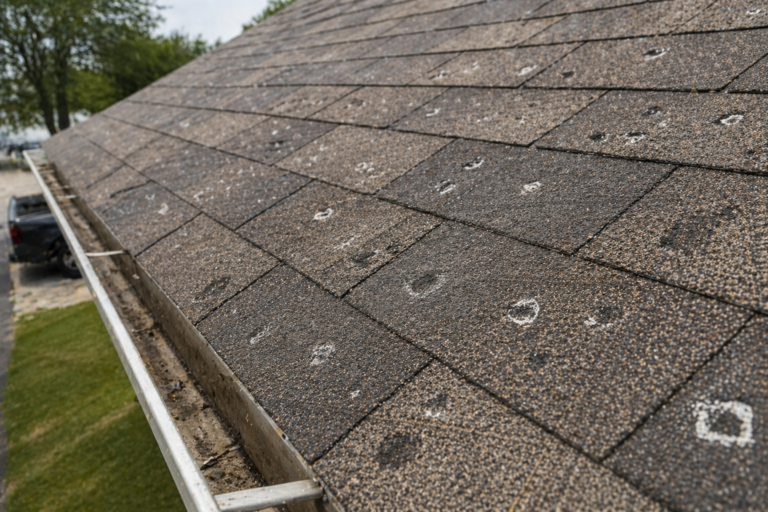
Hail damage is not always immediately visible to an untrained eye, yet it can compromise the integrity of the roofing system in ways that lead to long-term issues. Functional damage, meaning damage that affects the roof’s ability to protect the structure, is the standard insurers use when evaluating claims.
On asphalt shingle roofs, hail can displace protective granules, expose the underlying mat, or create soft impact marks that weaken the material. These areas may not leak immediately but can accelerate deterioration and reduce the lifespan of the roof. Metal components such as flashing, vents, and gutters often show clear denting, which can support a claim by confirming the severity of the storm.
Interior indicators may also develop over time. Water intrusion, staining on ceilings, or insulation moisture can be traced back to compromised roofing materials. When properly documented, these findings strengthen the connection between the hail event and the damage.
Why Claims Are Approved, Reduced, or Denied
Insurance companies do not evaluate claims based solely on whether a storm occurred. They assess whether the damage meets policy criteria and whether the claim has been substantiated with sufficient evidence.
Claims are typically approved when the damage is clearly linked to a specific storm event, documented promptly, and shown to affect the roof’s functionality. Timely reporting is particularly important, as delays can give insurers grounds to question causation.
Important: Claims are often reduced or denied when insurers classify the condition as cosmetic or attribute it to aging and maintenance issues. In these situations, the difference between approval and denial often comes down to the quality of the inspection and the documentation presented.
The Financial Impact of Policy Type
One of the most significant variables in any hail damage claim is whether the policy pays on an ACV or RCV basis. This distinction directly affects the amount a homeowner receives.
Under an ACV policy, the insurer calculates the value of the roof at the time of loss by subtracting depreciation. For older roofs, this can result in a settlement that covers only a fraction of the replacement cost. Under an RCV policy, the insurer initially pays a portion of the claim and releases the remaining funds once repairs are completed, ultimately covering the full replacement cost minus the deductible.
Understanding this distinction before filing a claim allows homeowners to set realistic expectations and plan accordingly. If you are unsure how your policy language applies to your roof claim, working with a licensed public adjuster can help you understand the coverage, exclusions, and settlement process before accepting an insurance company’s offer.
The Claims Process: Where Most Outcomes Are Determined
The process begins when a claim is reported to the insurance carrier. An adjuster is assigned to inspect the property and prepare an estimate. This estimate forms the basis of the insurer’s settlement offer.
While the process appears straightforward, this is the stage where most claims are undervalued. Insurance adjusters represent the carrier’s financial interests. Their assessment may overlook or minimize certain types of damage, particularly when it is not immediately visible.
A thorough, independent evaluation can significantly change the outcome. This is why many property owners choose to involve a public adjuster early in the process instead of waiting until the claim becomes difficult to dispute.
How to Strengthen and Maximize a Roof Hail Damage Claim
A successful claim is built on clear evidence and proper presentation. Documentation should begin as soon as possible after the storm. Photographs of visible damage, records of the storm event, and professional inspection reports all contribute to establishing causation and scope.
Equally important is understanding the language of the policy. Coverage limits, exclusions, and endorsements all influence how the claim is evaluated. Without this understanding, homeowners are often at a disadvantage during negotiations.
Engaging a professional to interpret the policy and manage the claim can prevent costly mistakes. Keystone Adjusting provides detailed inspections, prepares comprehensive claim documentation, and negotiates directly with insurers to secure appropriate settlements. For more guidance on protecting your payout, read more about how to maximize your insurance claim.
Frequently Asked Questions
Will insurance pay for roof hail damage on an older roof?
Yes, but the payout may be reduced depending on depreciation and policy type. Older roofs often receive ACV-based settlements unless the policy specifies otherwise.
How quickly should a hail damage claim be filed?
Claims should be filed as soon as damage is identified. Delays can complicate causation and may result in reduced or denied coverage.
Can hail damage be considered cosmetic?
Insurance companies may classify certain damage as cosmetic, particularly on metal surfaces. However, documentation demonstrating functional impact can challenge this classification.
What happens if the initial claim offer is too low?
Settlement offers can be negotiated. Additional documentation or professional representation often leads to higher revised payouts.
Is it worth hiring a public adjuster for hail damage?
In many cases, yes. A public adjuster ensures the claim is fully documented, accurately valued, and properly negotiated.
Conclusion
The question will insurance pay for roof hail damage has a nuanced answer. Coverage is generally available, but the outcome depends heavily on how the claim is prepared, documented, and presented. Homeowners who rely solely on the insurance company’s initial assessment often receive less than they are entitled to under their policy.
Contact Keystone Adjusting
If your property has sustained hail damage and you want to ensure your claim is handled correctly, contact Keystone Adjusting today. A professional evaluation can make a measurable difference in your final settlement.
Contact Keystone AdjustingCall: (215) 458-2616




 535 NJ-38 #355K, Cherry Hill Township, NJ 08002 |